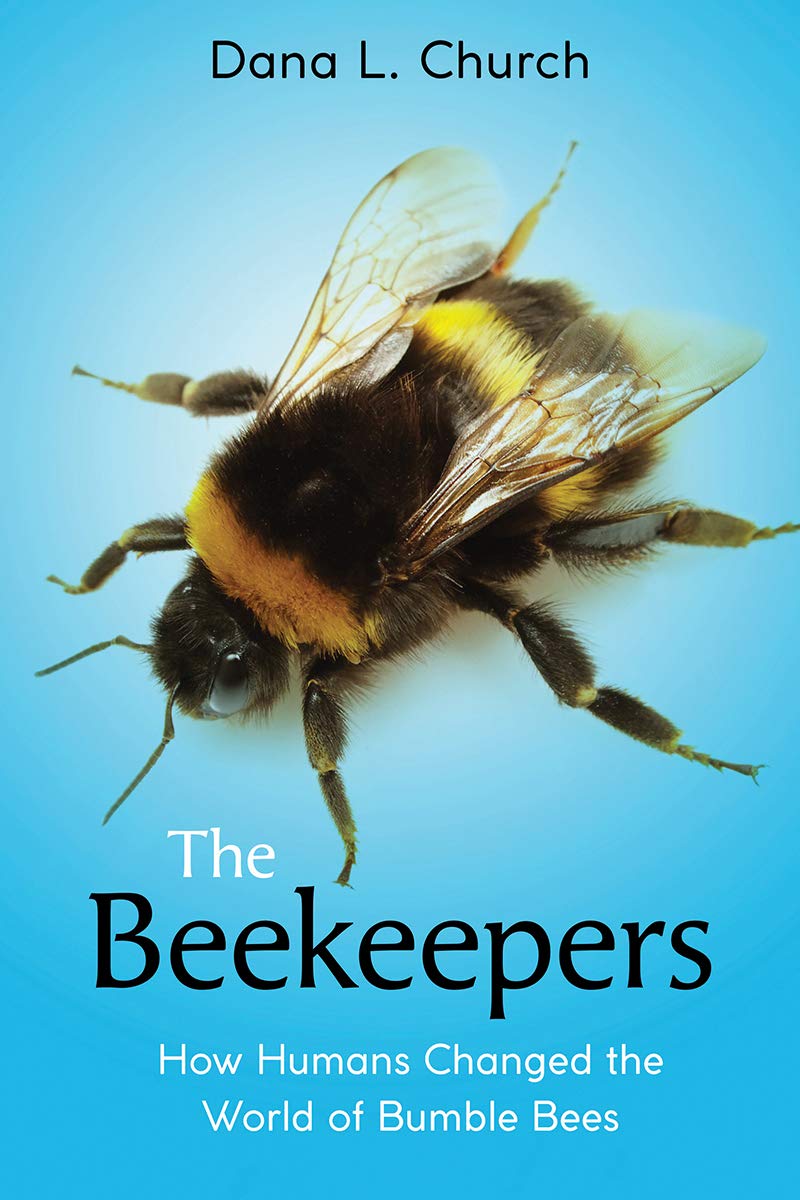
If you are looking for a book about bumbles bees that the whole family might enjoy, check out the middle grade title, The Beekeepers: How Humans Changed the World of Bumble Bees by Dana L. Church.
Why bumble bees? Honey bees have gotten a lot of press lately, but bumble bees are also important pollinators.
 Public domain photograph of a Solanum flower from USGS Bee Inventory and Monitoring Lab Flickr Page
In fact, bumble bees are much better at pollinating certain plants, especially tomatoes and other members of the genus Solanum.
Summary:
After briefly describing the history of studying and keeping bumble bees, Church discusses the business of selling bumble bees to pollinate plants in greenhouses. She explains that the bumble bee you see in your yard may be a native one or may be an import that has escaped from a nearby tomato-growing operation.
Later chapters explore some marvels of bumble bee behavior, before revealing how some species of bumble bees are waning in numbers and on the brink of disappearing. The last chapter summarizes some of the things that are being done to protect and encourage bumble bees. The author also has a page of information for helping wild bees on her website.
 Public domain photograph of Bombus huntii from USGS Bee Inventory and Monitoring Lab Flickr Page
Back Story/Discussion:
I have to admit, it wasn’t love at first glance with this book. When I found it in the juvenile nonfiction section of the library, I didn’t know quite what to make of it. Written for middle grades (8-12 year olds), it stood out among the sea of picture books because it is 308 pages long. I thought someone had shelved it in the wrong place.
The title was also a bit confusing, too. Although it can refer to any bee, the term beekeeping usually brings to mind honey bees rather than bumble bees. But, who can resist a book with a bumble bee on the cover?
The Beekeepers would be of interest to adults who enjoy popular science. Because it was written with a younger audience in mind, it is a quick and enjoyable read. It would also be appropriate for middle graders and young adults who are interested in science and nature, and especially insects. It would also be a great jumping off point for a research paper or science fair project on bumble bees. Check out a copy today.


Reading age : 8 – 12 years
Publisher : Scholastic Focus (March 2, 2021)
ISBN-10 : 1338565540
ISBN-13 : 978-1338565546
Disclosure: I am an affiliate with Amazon so I can provide you with cover images and title links to more information about books and products. As you probably are aware, if you click through the highlighted title link and purchase a product, I will receive a very small commission, at no extra cost to you. Any proceeds help defray the costs of hosting and maintaining this website.




 (Cover images and titles are Amazon affiliate links.)